

UnTangled Live from NTC with Bree Benn – Hot Takes from the Cool/Scary AI Summit
If you’ve never been to the Nonprofit Technology Conference, add it to your calendar right now. Three days, great people, a city worth exploring, and this year it was in Detroit. Sun was actually out on day three. We were practically giddy.
But one of the things I was most fired up about was the day before NTC even officially started: the Cool/Scary AI Summit, put on by Stratovation Partners. Last year in Baltimore was the first one, and it felt like we were all kind of gathering around to ask “wait, what even is this AI thing?” This year was completely different. The room was full of people who have already put the pedal to the metal and are figuring out what’s actually possible. The conversation has moved.
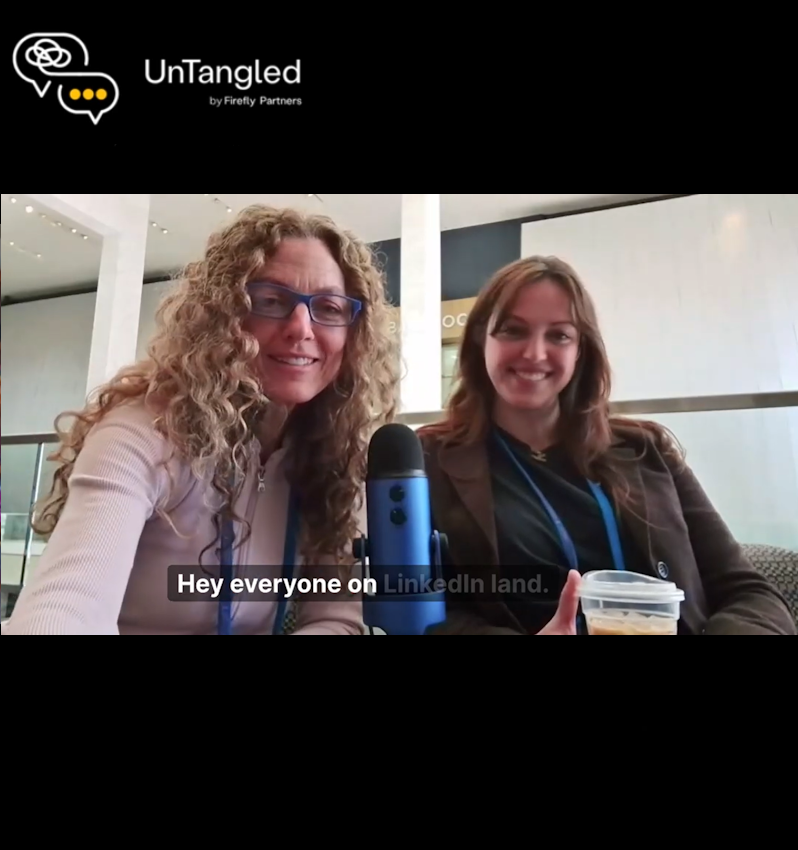
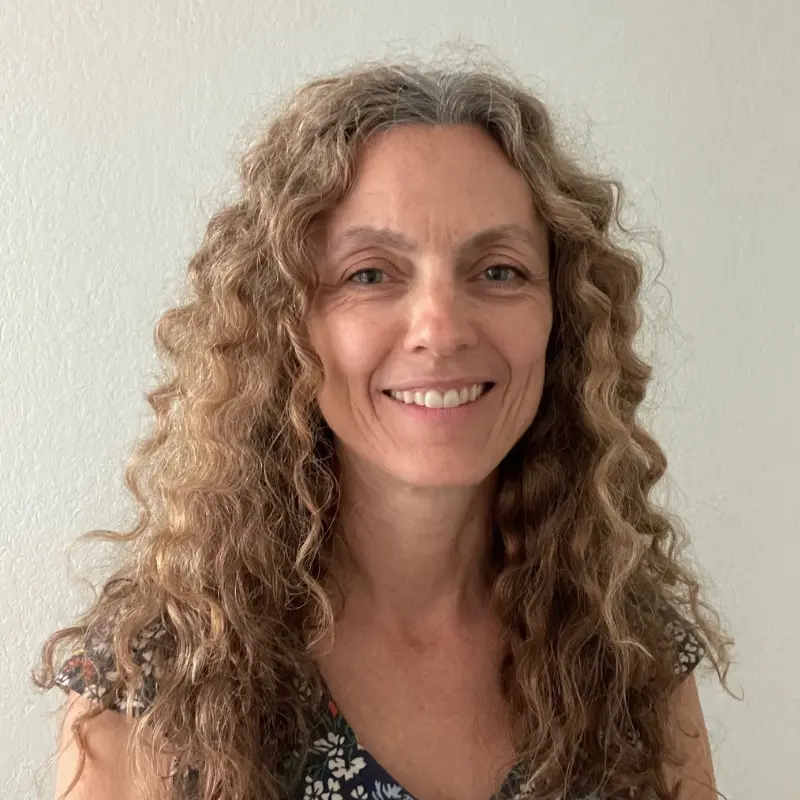
A couple of days later, I was joined on UnTangled by Bree Benn, co-founder and COO of Advocacy AI, who was able to make it to NTC despite currently living in Japan! She’s been working in the digital advocacy space for about a decade and brings a wonderfully nerdy, problem-solving lens to all things AI. She had some great hot takes, and so did I, so here’s a roundup.
Building websites just got a little wild
Leah Lundberg from Engine9 rebuilt their entire website using a tool called Replit. She’s a designer, not a developer. She did it in roughly a day or two, just by describing in very specific detail what she wanted. Navigation, graphics, layout, all of it, just by telling the tool what she needed. The website is gorgeous. I was kind of losing my mind a little watching the demo.
Now, to be clear, there is still absolutely a place for full CMS platforms like WordPress or Drupal. Deep content libraries, complex authoring permission layers, structured content types, sophisticated integrations, all of that still calls for a more robust system. But the idea that you could build an entire functional site in a couple of days and then update it by typing plain English prompts? That is a different world than the one we were in a year ago. I’m already wondering if I should try it on the Firefly website, so, maybe stay tuned on that one.
The conversation shifted from “to AI or not to AI” to “okay it’s here, now what?”
This was Bree’s hottest of hot takes, and she’s right. Last year, there was still a lot of “here’s what AI is” and “here are the ethical concerns and environmental impacts you should know about.” Those conversations still matter. But this year the tone was different. It was less about whether and more about how. As Bree put it, the question is no longer to do or not to do. It’s how are we doing it, and how do we make sure it works for people.
Tech versus democracy: two talks worth paying attention to
Two of the talks at the summit covered some overlapping territory but from really different angles, and both stuck with me.
Bree highlighted Anne Murphy of She Leads AI, who talked about anti-techno-feudalism. Her argument is that the concentration of power in the hands of a tech oligarchy is not just uncomfortable or frustrating. It’s a structural problem, and it’s our civic responsibility to push back on it. The framing was less about any one tool and more about who holds power over the technology that’s already woven into our daily lives, payment systems, desktop platforms, the works. Bree found this framing really resonant, especially given the advocacy work she does, and I think it will stick with a lot of folks in the sector.
The other talk, which I found absolutely brilliant, was from Christy McGillivray, ED of Voters Not Politicians. Her session was called Tech for Democracy, or Tech versus Democracy, and it was part history lesson, part civics class. She walked through what democracy actually is, what the Constitution actually says, and then made the case for why the current concentration of tech power isn’t just bad policy, it’s constitutionally problematic. Her argument was that engaging with these questions, understanding them, speaking up about them, is not optional. It’s civic duty. She was fired up, and honestly, so was I. She is hopefully going to be a future UnTangled guest, so you all can hear that talk from start to finish – it is a good one, and I am trying to make it happen.
Both talks pushed in the same direction: using AI intentionally and questioning who controls it is not just a strategic choice. It is participation in something bigger, and it is our responsibility as critically thinking and civically involved citizens.
Designers are becoming creative directors whether they’re ready or not
Bree called out a hot take from Katy Hinz, Creative Director at Teal Media, about what’s actually happening to creative roles right now. The designers who will thrive aren’t the ones who panic; they’re the ones who step into the art direction seat. Having the vision for what good design looks like, what’s appropriate for a brand, what’s stolen or off, that’s a deeply human skill. AI can execute. It can brainstorm. It can mock things up quickly. But the interpretation layer, the judgment call, that’s still yours.
This isn’t the first time a new tool threatened to eliminate designers and then created more work instead. Leah pointed out that desktop publishing had the exact same moment. Spoiler: designers didn’t disappear. They just had to learn a new tool and work overtime doing it.
On women, AI, and going deeper
Bree was generous enough to shout out a talk I gave at the summit about the gender gap in AI adoption in the nonprofit sector, and I’ll just restate the core of it here. The data is real. Women may be using these tools at roughly similar rates to men on the surface, but the depth of use is different. Women tend to stay at the surface level, and the confidence gap is significant. A lot of women say they use AI but don’t feel like they know much about it.
My message was pretty simple: go deeper. Stop apologizing for asking questions. There are no dumb questions in AI right now because literally none of us have the full picture. And the organizations, firms, and consultants you work with should be thinking about these problems alongside you. Ask them what they’re doing. Push them on it.
The room was, by the way, largely women. That’s the sector. And the sector deserves to be part of building what comes next.
The biggest takeaway from the whole week
Here’s what I keep coming back to. A solid chunk of NTC sessions this year had something to do with AI. That’s progress. But I still heard a lot of conversations about organizations trying to sit this one out. And I want to say, as directly as I can: that is not an option.
Talk through your ethics concerns. Work through your data privacy questions. Figure out how you are going to handle the environmental impact in a way that aligns with your values. Those conversations are worth having and they matter. And then get in the game.
The people in that room at the Cool/Scary AI Summit are pushing the sector forward, and it is great to see. But more nonprofits need to follow. The window to be thoughtful and intentional about how you adopt these tools is not going to stay open forever. Better to show up now with your questions than to be catching up later with no leverage.
Watch the full episode here:
Ready to get in the AI game with intention? Let’s talk!
Thanks! You’ll hear back within 48 business hours
In the meantime, why not check out our latest case study?

Whether you need help with a project, want to learn more about us, or just want to say hi, you’ve come to the right place.