

UnTangled with Delia Coleman: Why the AI Gender Gap is a Nonprofit Risk
Nonprofits are already deep in conversations about AI. Efficiency. Ethics. Productivity. Fear. Hype. Tools we should or should not be using.
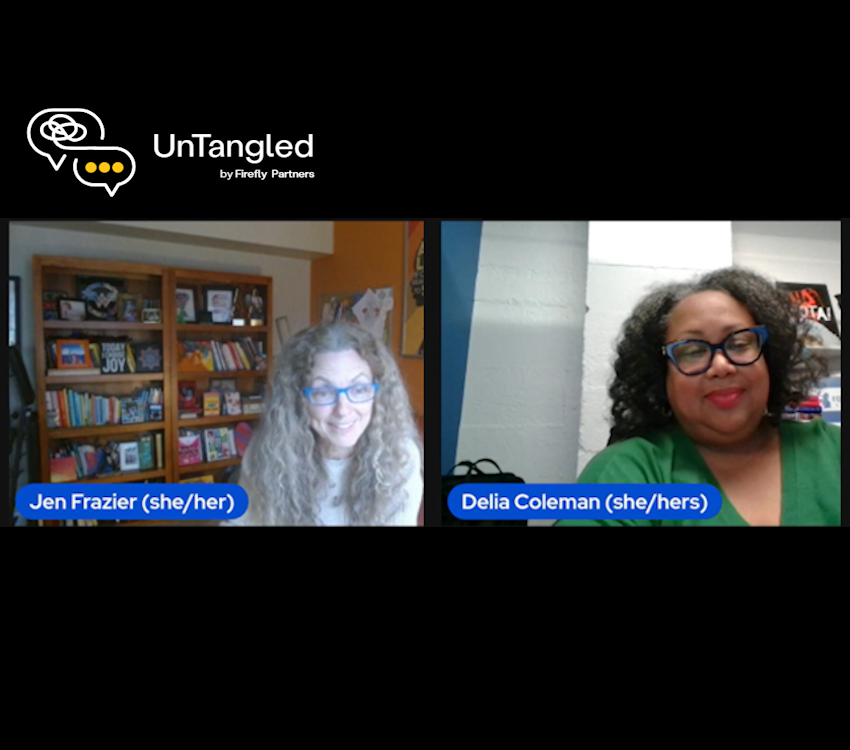
But until a recent conversation on UnTangled with my friend Delia Coleman, there was one risk I had not fully named. The gender gap in AI adoption is not just a workforce issue. It is a structural threat to the nonprofit sector itself.
This matters because AI is not some future possibility we can choose to engage with later. It is already shaping how work gets done. And if nonprofits are not helping shape how these tools evolve, we will be left responding to systems that were not designed with our values, our missions, or our communities in mind.
AI Is Already Here. Opting Out Is Not Neutral.
AI is not a single product or platform. It is embedded in the tools nonprofits already use every day.
CRMs automate workflows. Design platforms generate visuals. Video tools create transcripts. Email platforms optimize subject lines. Slack and databases rely on automation that quietly makes decisions in the background.
Many nonprofits feel behind, understandably so. Budgets are tight. Teams are stretched. The sector is tired of being told to catch up.
But opting out does not pause the world. It simply removes our influence.
If AI is already shaping how work happens, the real question is who gets to shape AI.
The Gender Gap Is Real and the Sector Should Be Alarmed
Research across industries shows that women are significantly less likely than men to use or be exposed to AI tools. This is not because women lack curiosity or capability. It is structural.
Women are more likely to be concentrated in frontline and service roles. Those roles are less likely to receive training, experimentation time, or early access to new tools. Many women also carry justified concerns about ethics, privacy, and harm and choose to disengage rather than push forward blindly.
Here is why this becomes a nonprofit crisis.
Nonprofits are largely powered by women. Especially in program, operations, and frontline roles. If the people doing the bulk of the work are not being supported to understand and shape AI, the entire sector loses ground.
This is not about individual skill gaps. It is about access, power, and design.
A sector powered by women cannot afford a future designed without them.
Time Is the Real Issue and It Is an Equity Issue
AI will not magically free us from work. Anyone selling that story is not paying attention.
What it can do is remove friction. It can shorten tasks that drain energy without adding meaning. Drafting first passes. Generating options. Creating visuals when no designer is available. Summarizing long documents. Turning one piece of content into many.
Those minutes matter. Especially in a sector that runs on chronic urgency.
Time saved is not a luxury. It is the difference between burnout and sustainability. Between reacting and thinking. Between doing work and leading it.
When access to time-saving tools is uneven, that becomes an equity issue.
“We Need to Do Something With AI” Is Not a Strategy
One of the most important points Delia raised was this. Leaders returning from conferences declaring that their organization needs to do something with AI are not helping.
AI is not a monolith. Strategy matters.
A better starting point looks like this:
- What tools are we already using that include AI or automation?
- Where are staff spending time on repetitive low-value tasks?
- Where does human judgment need to stay firmly in control?
- Who is involved in deciding these answers?
AI works like delegation. It performs best when expectations are clear, guardrails are set, and humans remain accountable for outcomes.
Out-of-the-box tools give out-of-the-box results.
The Point That Changed the Conversation for Me
Toward the end of the conversation, Delia named something that reframed the entire issue.
The real risk is not just that women are slower to adopt AI. The real risk is that women and other marginalized groups are not shaping how these systems are built in the first place.
She talked about hidden genius. The insight and foresight that exist in communities that have historically been excluded from design and decision-making.
We have seen this pattern before. Technologies are released quickly. Harm becomes visible. Then marginalized communities are asked to help clean up the mess.
That is not innovation. That is negligence.
Women and people of color have consistently been the first to flag ethical risks. Bias. Privacy. Environmental impact. Community harm. Those concerns are not obstacles. They are leadership.
The nonprofit sector understands something the tech world often ignores. Anticipating harm is part of responsibility, not a delay tactic.
If nonprofits only adopt AI after it has been shaped elsewhere, we give up the chance to design systems aligned with care, accountability, and justice.
Using the tools is not enough. We need to help break them, question them, and build better ones.
Waiting for Perfection Is the Riskiest Choice
Concerns about data privacy, intellectual property, and environmental impact are real. They deserve serious attention.
But waiting for these issues to be fully resolved before engaging guarantees one outcome. We will have no influence over the solutions.
The good news is that alternatives are emerging. Closed-system tools. Mission-aligned platforms. Providers building specifically for social impact organizations that prioritize safety and ethics.
The sector does not need to adopt everything. But it does need to engage intentionally.
If nonprofits are not at the table now, we will spend the next decade reacting to decisions already made.
A Different Kind of Leadership Moment
This is not about becoming more tech-forward for the sake of appearances. It is about stewardship.
Who has access to learning.
Who gets invited into experimentation.
Who shapes the questions before tools shape the answers.
If women and frontline staff are centered early, AI adoption looks different. More ethical. More grounded. More aligned with mission.
This moment offers nonprofits a rare opportunity. Not just to keep up, but to lead differently.
The future is being built whether we participate or not. The choice in front of us is whether we help design it or spend our energy navigating around it later.
Watch the full episode here – https://www.linkedin.com/events/untangledwithdeliacoleman-makin7403053106021736448/
And if you are ready to jump into AI adoption at your org, let’s talk!
Thanks! You’ll hear back within 48 business hours
In the meantime, why not check out our latest case study?

Whether you need help with a project, want to learn more about us, or just want to say hi, you’ve come to the right place.