

UnTangled with Leah Lundberg: Your Website in a Day Is Just the Warm-Up

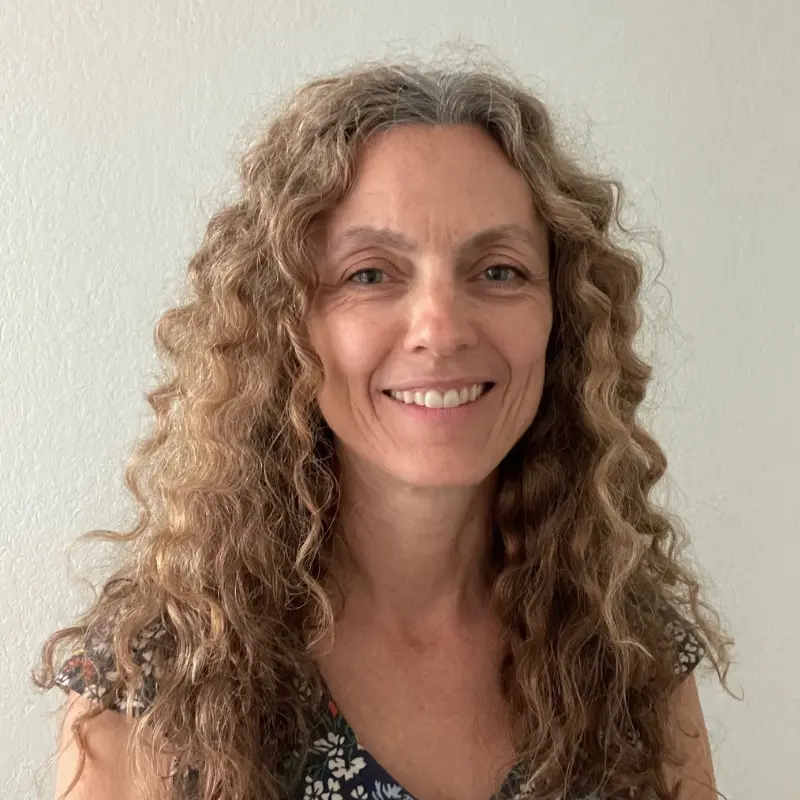
On last week’s episode of UnTangled, Leah Lundberg said something toward the end of our conversation that I keep coming back to: “We are restricted by our own way of thinking. That is the biggest barrier right now.”
She was talking about building websites. But she was really talking about everything.
Leah is VP of Marketing and Ops at engine 9 and Frakture, two companies that have been quietly doing the robots-doing-the-work thing since before it was cool to talk about AI. We started with something that felt almost too simple: yes, you can now build a production-ready website in a day using no-code AI tools like Replit. No developer required. Leah did it. I tried it. It is real.
But the website is just the warm-up.
What Actually Happened When Leah Built the engine 9 Site
Leah came into this with a design background, not a development background. She knew what she wanted, she had a clear brand voice, and she went in with a list. That last part matters more than people realize. She fed Replit her existing site, asked it to recreate the look and feel, and it wrote content that was sometimes better than what she had written herself. She also caught it making things up that sounded completely plausible. She had to check everything.
She also accidentally left a table of email addresses completely unsecured before she caught it. Her advice, and I am underlining this: before your site goes live, explicitly prompt it to secure your data. It will not do this automatically. That is on you.
The maintenance headaches that have plagued nonprofits forever, broken plugins after updates, content you cannot touch without a developer, templates you are stuck inside, those are genuinely going away. Rapid response pages you can spin up and take down in hours. Homepage sections you can rewrite in a conversation. SEO and AI optimization baked in because you asked for it.
And yes, Leah had a story about asking AI to generate something “edgy” for a t-shirt and it came back with “LLM Lives Matter” in the background. She caught it before it went to print. Which is exactly the point. The human in this process is not optional. You are the one with judgment. The AI is the one with a very large and occasionally unhinged knowledge base.
The Bigger Story: Your Whole Tech Stack Is Changing
The website piece is one thread in a much larger shift that Leah and her team have been working on for years through Frakture and engine 9.
Here is the short version. Most nonprofits are running on five or more disconnected tools: your CRM, your email platform, your donation processor, your event software, and your website. Each one holds a piece of your data, and none of them talk to each other cleanly. A data warehouse pulls all of that into one place, standardizes it, and suddenly you have actual attribution. You can see the lifetime value of a donor. You can pull a list of everyone who attended a specific event two years ago and has given since. You can do that in plain English, no SQL required, no engineering ticket, no waiting.
That is what engine 9 is doing. And Salesforce just announced a headless CRM move that signals even the big players know the old model is done. Leah’s take: do not be fooled. If it is Salesforce, you are still in their ecosystem, still paying their prices, still locked into their contracts. Her words, not mine, but I am not going to pretend I disagree.
The sunk cost conversation came up hard. If you have invested a lot of money and time into a platform that is not serving you, that money is already gone. Dragging it forward does not bring it back. The organizations that are going to thrive are the ones that can look at what is actually available now and make decisions based on where things are going, not where they have been.
The Shift I Have Been Making Over the Last Few Weeks
For a long time, the conversation around AI has often been about how do we take our existing processes and make them more efficient with AI. How do we sprinkle AI on top of the methodology we have spent fifteen-plus years refining? I have been guilty of this framing.
But I think that is the wrong question.
The better question is: Here is the problem we are trying to solve. Ask your AI platform how it would solve it.
When you come in with a problem and an AI-first approach, you often end up somewhere completely different and much more interesting than if you had just tried to AI-ify the old way. I had a moment recently working on our own site where I was hunting through code trying to find a snippet that would recreate a small animation. My developer and I were going in circles. Claude basically said: just take a video of it and show me. Upload it and I will build it. And I stood there thinking, why did I think I needed to find the code? I was still in the old mental model.
That is the most important shift I have made in the last few weeks. And it is worth naming clearly.
We are not just learning new tools. The real change is moving from “how can AI make what I already do more efficient” to “how do we build an AI-forward approach to solving this problem.” Those are two different questions and they lead to two very different outcomes. The second one requires you to give AI the context, the constraints, and the goal, and then actually let it show you a different path. You are still in the driver’s seat. But you are not just paving over the old road.
Why This Matters Especially for Nonprofits
I know there is a lot of overwhelm in this sector right now. I heard it at NTC. I hear it everywhere. And I am not here to add to that pile.
But there is a window right now where the tools being built are still shapeable. Open source options are growing. Mission-aligned platforms are emerging. There are organizations building specifically for social good that are not going to lock you into a three- or five-year contract or charge you per seat for features you will never use.
The longer we wait to engage, the more the defaults get set by people who are not thinking about our communities, our values, or our missions. We have a real shot right now to help shape what these tools look like and how they work. That is not a threat. That is an invitation.
You do not have to rebuild your entire tech stack tomorrow. But getting curious now, and starting to think about your work in an AI-first way rather than an AI-assisted way, is where the real opportunities are. The organizations that figure this out are not just going to work more efficiently. They are going to have capabilities that were simply not available to them before. And that changes what is possible for the people they serve.
That is worth getting excited about.
Watch the full episode here and then let me know: are you still trying to make your existing processes more efficient with AI, or are you starting to take an AI-first approach to solving problems? I think that conversation is just getting started.
Thanks! You’ll hear back within 48 business hours
In the meantime, why not check out our latest case study?


Whether you need help with a project, want to learn more about us, or just want to say hi, you’ve come to the right place.