

UnTangled with Rachel Kimber: From Stuck to Strategic
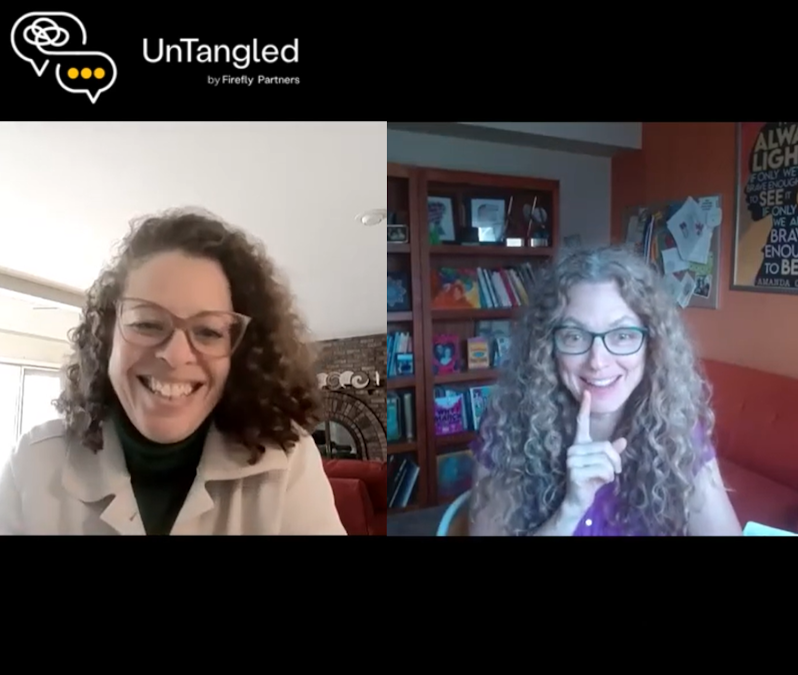

Something shifted at NTC 26 this month. If you were there, you felt it. The energy was different from the last couple of years, less shell-shocked and more like, okay, we know things are hard, and we are going to figure this out together. My guest last week on UnTangled, Rachel Kimber of Full Circle Impact Solutions, described it as a family reunion. People were having real conversations across functions. And a lot of that energy was centered on AI, not because everyone is suddenly excited about it, but because the sector is finally moving past the question of whether to engage and into the much more interesting question of how.
That shift matters. Because the window to help shape how AI evolves in the nonprofit sector is open right now, and it will not stay open. The norms around how these tools get used, who has a voice in designing them, and what guardrails actually look like in practice are being written as we speak. If your organization is still sitting on the sidelines waiting for things to settle down, I have some news. They are not going to settle down. This is the moment.
Two Traps, and How Organizations Fall Into Both
In my experience, organizations right now tend to fall into one of two traps. The first is analysis paralysis. Leadership wants to get it right, so they keep thinking, discussing, forming committees, and waiting for more clarity before making any moves. The second is the opposite: different people across different teams are already deep in the deep end, each using different tools in different ways, with no shared guidance or guardrails in sight, and leadership has no idea what data is going where.
Both of these are risky. The first leaves your organization with no influence over how AI gets used internally or how the sector shapes these tools more broadly. The second creates real exposure around brand reputation, data privacy, and organizational trust. Rachel put it memorably: you need a lid on the blender. Without it, you already have a mess, you just cannot see it yet.
The path forward is not to pick one of these traps and call it a strategy. It is to get moving thoughtfully, with actual governance behind it.
This Is a Change Management Problem, Not a Tech Problem
This was the frame Rachel brought to the conversation, and what it actually means to move from Stuck to Strategic. AI readiness does not start with tool selection. It starts with alignment. Who owns decisions about data use? What do we actually mean when we say AI? How does this fit with our values and strategic priorities? If your leadership team cannot answer those questions consistently, you are going to create friction and risk faster than you create efficiency.
Rachel compared it to how organizations built shared language and practice around DEI work. It touched every function, required ongoing conversation, and could not live in one department. AI is the same. You cannot hand it to IT and call it done. You need shared language, clear ownership, and leadership that is actually engaged, not just delegating.
A Policy in a Folder Is Not Governance
Here is where I want to name something directly. A lot of organizations are going to write an AI use policy, file it away, and consider the governance box checked. Rachel made the comparison to sexual harassment policies in the Mad Men era. They existed on paper for decades. Almost no one was living them.
We cannot let AI governance become that folder. The goal is not the document. The goal is practice, and practice requires intentional rollout, real training, and ongoing attention.
Here is what we think the floor looks like for most nonprofits right now: an AI use policy that is a living document and not a one-time checkbox; a paid Gen AI platform for your team, ideally launched first with a small super user group who can help configure it and set the tone before it goes org-wide; and an AI note-taker so meetings get documented without burning staff time. These three things are not everything, but they are the fundamentals we believe every team needs to get moving on now. And yes, we can help with all of it if you are not sure where to start.
The Tools Have Bias Baked In. Plan for It.
Getting moving does not mean getting naive. These tools were built on the internet, which means they were built on Reddit, Substack, Wikipedia, and mountains of user-generated content of wildly variable quality, not to mention all the built-in biases our sector has worked so hard to combat. Rachel shared a pointed example from her own work. Early on, when she asked a presentation tool to generate professional imagery, it defaulted to boardrooms full of white men in suits. That is not a glitch. That is the training data doing exactly what it was built to do.
For mission-driven organizations that care about representation and inclusion, this cannot be an afterthought. There are ways to address it. Sector-specific tools like Change Agent are built with these issues more explicitly in mind. And for general-purpose Gen AI platforms, you can do meaningful work at the organizational level to configure and train the tool to account for bias in its outputs. Nothing is perfect, but a thoughtful setup is a lot better than hoping for the best. This is one of the places where getting good support early pays off.
Skeptics: The Table Needs You
Before I close, I want to say something directly to the people who are not sure about any of this. If you have real concerns about AI, about bias, privacy, environmental impact, critical thinking, the erosion of human judgment, those concerns are not obstacles. They are leadership. Rachel said it well: if you are a skeptic, do not stay home. Get on the AI committee. The voices that flag risk, ask hard questions, and push back on easy answers are exactly what a good internal working group needs. An AI committee made up entirely of enthusiastic early adopters is going to miss things.
We also need to get a little more comfortable with productive disagreement. Sitting on a debate stage and arguing with colleagues you respect is uncomfortable. It is also sometimes exactly what moves the conversation forward.
Wherever You Sit, There Is a Role for You Here
If you are in a leadership role and have been waiting to feel more prepared before you act, I understand that feeling. But the answer is to get informed, not to wait longer. Get some training, ask for help, start the conversation with your team. You do not have to have all the answers to lead on this.
If you are not in a formal leadership role and you are not seeing your organization take meaningful steps, you still have a role. Raise your hand. Name the friction. Offer to be the internal champion who helps move the conversation forward. In my experience, leadership is usually relieved when someone steps up.
The norms around AI in our sector are being written right now. That is not a metaphor. It is just true. The organizations that show up for this conversation, that bring their values and their skepticism and their mission into the room, are the ones that get to help shape what comes next. The ones that wait are going to spend a long time navigating around decisions that were already made without them.
Come be in the room.
Watch the full episode with Rachel here:
And if you are ready to get moving at your organization and want a thought partner, let’s talk.
Thanks! You’ll hear back within 48 business hours
In the meantime, why not check out our latest case study?


Whether you need help with a project, want to learn more about us, or just want to say hi, you’ve come to the right place.