

UnTangled with Ryan Baillargeon: Building Tools for the Agentic Digital Fundraiser
There is a person who exists in almost every nonprofit I have ever worked with or for. They did not come up through a formal tech training program. They showed up curious, picked up tools fast, and suddenly more tech kept landing on their plate. They became the person who knew how everything worked, sat at the intersection of mission and digital and people, and held it all together without a title that reflected any of it.
When they leave, organizations feel it for months. So much of what they carried was never documented, never in a job description, never really acknowledged.
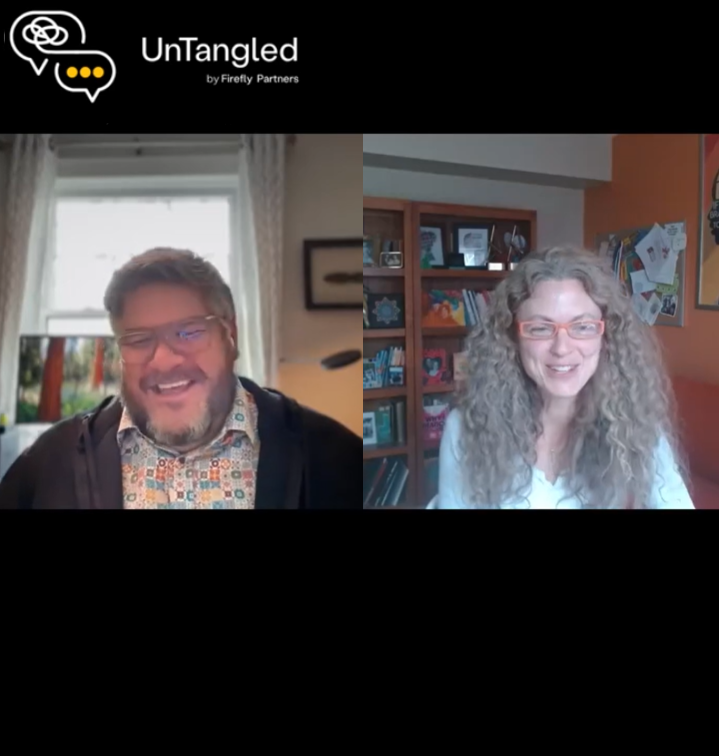
Ryan Baillargeon from Grassriots has been building for that person. And after a career of working in digital fundraising and advocacy on both sides of the border, he has built something that I think they actually need.
From Protectionist to Builder
When I sat down with Ryan for this episode of UnTangled, the first thing that struck me was how honest he was about his own journey with AI. When the early GPT tools started rolling out, Ryan was not convinced. He was skeptical in a way that felt principled, not just resistant. He watched what happened with crypto and the gig economy, saw how quickly a few big companies absorbed power when legislative guardrails lagged behind, and decided to protect his team and their work.
For two years, Grassriots largely kept AI at arm’s length. And he still stands by that call.
But something else was happening at the same time. As a developer, he started actually using the tools. And he had an experience that I have now heard echoed by a lot of people who made it through that first uncomfortable stage.
“We had an existential crisis. We thought, this is crazy, it’s over. Who am I in this work anymore? And then, we started to use the tools and we started to have fun again.”
He described software development before AI as pushing a boulder up a hill and getting crushed by it a hundred times a day. One line of code could eat days. Creativity got stifled under the weight of constant friction. But once he started working with AI tools, ideas that had always been sitting in the back of his mind could actually become things. Fast. And he started having fun.
I can relate to that, in a different way. I was not a skeptic out of fear, but I was a late arrival to the aha moment. Through 2022 and 2023 I found the tools interesting but did not quite see what all the fuss was about. It was not until late 2024 that I really got hooked. By then the tools were significantly better, which made the joy easier to find. And to be honest, I think what has kept me grounded through all of it is the belief that AI cannot replicate what we bring from years of being in the trenches, doing the work, knowing the people and the sector. That human element is still the most interesting part. But I have stopped underestimating how much these tools can amplify everything else.
The Invisible Person
Ryan’s product did not start as a product. It started as a response to a question he kept turning over: who is being left out of this conversation?
The enterprise AI tools being built right now are largely built for marketers, strategists, and people at organizations with real budgets and dedicated digital teams. But that person I described at the top of this post? The one who is doing 12 jobs, learning on the fly, managing a fundraising page while also fielding Salesforce questions while also onboarding a new volunteer platform? Nobody is building for them. And they are the backbone of the digital fundraising work happening at the majority of nonprofits in this country.
Ryan said it directly: they are invisible in this space.
And so he started building for them. His open source platform, Crescendo, is focused on fundraising performance optimization for exactly that person. It pulls together data from Engaging Networks and Google Analytics and creates a live view, not just a retrospective dashboard, that you can have an actual conversation with. Not just: how did our campaign do last month. But: what is happening right now, what can we change, and what should we actually do about it.
Where the LLMs Actually Belong
One of the things Ryan said that I want to make sure does not get lost is that he was very intentional about where AI lives inside Crescendo. He is not giving the LLMs free rein over data processing. Code does that work. The agents come in for interpretation and conversation, for helping a human make sense of what the data is actually saying and what to do next.
That is a meaningful design choice and I think it reflects something important about where we are as a sector. The tools are powerful, but the accountability for outcomes still needs to live with a human. Especially when we are talking about donor data and fundraising decisions. The role of the AI is to help you think better, not to think for you.
“Being very considerate of where we’re at as a sector. Even though you could, we aren’t ready to take that leap yet.”
This question of where AI should and should not sit is going to keep coming up. It is actually what we are going to dig into next week with Valerie Ehrlich from Mission Bloom when we talk about what responsible AI use actually means. I have a feeling this conversation with Ryan is going to be good context going in.
We Need the Builders in the Room
Ryan closed with a call that I want to amplify as loudly as I can.
He is looking for other builders. People who are in the social sector, who have built or want to build tools for the work we do, who have ideas and energy and maybe more questions than answers right now. He wants to find those people and build something together.
I want that too. Honestly, it might be one of the most important things we could do right now as a sector.
We have spent years working inside platforms that were never really built for us. Using tools designed for corporate marketers, adapting them, workaround after workaround, spending real dollars on companies whose values are sometimes wildly misaligned with the missions we serve.
What if we could start to change that? Not by replacing developers or dismissing the real expertise required to build secure, scalable systems. But by building from the inside. By putting the people who know this work, know the messy workflows and the reporting pressures and the human stakes, closer to the tools being created.
I am a growing believer that the future of this sector’s digital infrastructure gets built by people from within the sector. Not waiting for enterprise solutions to eventually notice us. Not constantly adapting tools that were never designed for us. Building the actual things we need.
If a community of builders in the social good space is already forming somewhere, I want to know about it. Drop it in the comments. Tag someone. Send me a message. If it does not quite exist yet, maybe it is time to build that too.
Watch the full episode with Ryan here, and then follow him on LinkedIn to stay up to date on Crescendo and the work he is doing.
And if you are a builder or want to be one, reach out. The more of us in the room, the better.
Thanks! You’ll hear back within 48 business hours
In the meantime, why not check out our latest case study?

Whether you need help with a project, want to learn more about us, or just want to say hi, you’ve come to the right place.