

UnTangled with Ryann Miller: Before You Dive In – What Nonprofits Should Actually Do Before Using AI

I hear it a lot from people in this space. Nonprofit leaders coming back from conferences, fired up, ready to announce that their organization needs to ‘do something’ with AI. And I get the energy. I am genuinely enthusiastic about what these tools can do for mission-driven work. But that announcement, without any of the thinking behind it, creates a specific kind of problem for the people who have to receive it.
The first question I want every organization to ask before anything else: what problem are you actually trying to solve?
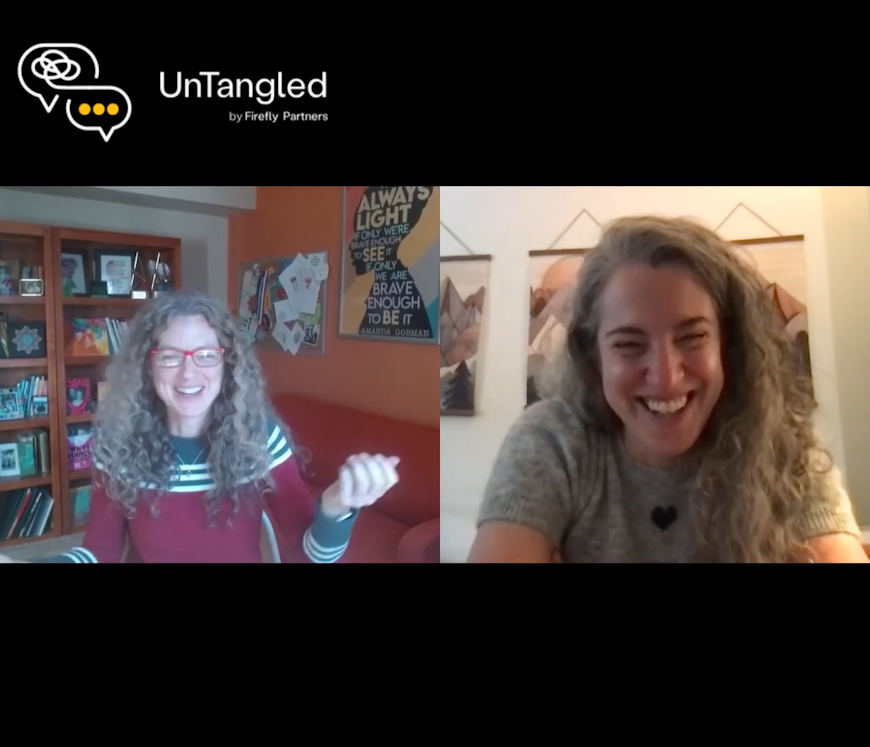
Last week on UnTangled, I sat down with Ryann Miller, founder of Spark and Signal, who has spent 20-plus years in the nonprofit digital space and now works specifically on AI strategy and governance for mission-driven organizations. Ryann brings a more skeptical and critical lens than I do, which made for a really honest conversation about what it actually looks like to get ready for AI and what most organizations are skipping.
AI is Like a Day at the Beach
Early in our conversation, I started riffing on this image of a day at the beach, and Ryann ran with it. Some people in your organization are in the parking lot, still in the car. Some are on the beach, watching. Some are in the shallow end. And some have already swum way out past the surf line.
And here is the part a lot of leaders miss: some of those deep-end swimmers are out there without a life jacket. Meaning they are using AI tools, sometimes on personal accounts, without telling anyone, and without any shared understanding of what guardrails exist.
I see that as a signal, not just a risk. If staff are going out of their way to use tools on their own time and their own accounts, it probably means the tools are actually helping them do their jobs. The job of leadership is not to shut that down.
But here is the real trick, and Ryann and I both kept coming back to this: the actual leadership challenge is creating conditions where the deep-end swimmers and the people still sitting in the parking lot can be in the same conversation productively. Those two groups have very different feelings about all of this, and both of them are valid. Getting them into the same room, with shared language and enough psychological safety to be honest, is where the real work happens.
Vague Directives Create Real Pressure
Here is something I want to name directly. When a leader announces that the organization needs to ‘do something with AI’ without any structure behind it, that creates undue pressure that has nowhere useful to go. Staff feel the urgency but have nothing concrete to work with. And then there is this added layer where you feel like you cannot ask too many questions, as if you are just supposed to know what the directive means.
That is not a small thing. That is how you get ten people quietly spinning in ten different directions, none of them sure they are doing the right thing, and nobody willing to say so out loud.
The hard cultural work, actually talking to your team about where they are, what they are already doing, what feels scary, what values should guide your decisions, that part does not happen at a conference. It happens at your staff meeting, in your one-on-ones, in the uncomfortable conversation where someone admits they have been using ChatGPT for months and did not tell you because they were afraid you would think they were trying to automate themselves out of a job.
That conversation is where a real AI strategy starts.
Start With Values, Not Tools
One place where Ryann and I think a little differently, in a productive way, is where to begin. She anchors everything in values first. What does your organization actually care about? Environmental impact of AI infrastructure. Data privacy. Who owns the outputs? Who gets to make decisions about which tools get used?
I tend to come at it from the problem side. What are you actually trying to solve? Where are people spending time on things that do not require their full brainpower? Start there and let the values filter which solutions make sense.
Honestly, both are right, and neither works without the other. Start with values, but never define a problem, and you end up with principled paralysis. Start with a problem, but skip the values conversation, and you end up with solutions that create new problems. Do both. In whatever order helps your team actually move.
The Ownership Gap No One Is Talking About
One of the most useful things Ryann named is something I hear about constantly. Nobody owns AI. It falls in the gap between the comms team and the ops team and whoever handles tech and the executive director who is loosely enthusiastic about it. There is no one person or working group responsible for making coherent decisions about how the organization actually uses these tools.
That is not sustainable. It is how you end up with ten people using ten different tools for the same function, no shared documentation, no shared prompts, and no ability to evaluate what is actually working.
You do not need a dedicated AI staff person. Most nonprofits do not have a budget for that. But you do need to name someone, or have a working group that addresses these issues, who is tracking what is happening, helping create shared resources, and making sure decisions get made intentionally rather than by default.
The Unsexy Stuff Is the Most Useful Stuff
Ryann said something here that I wholeheartedly agree with. The most valuable AI use cases for nonprofits right now are boring. Summarizing long documents. Creating first drafts. Turning one piece of content into several. Generating options for a subject line so a human can pick the best one.
Not building agents. Not replacing programs staff. Not doing anything that requires a TED Talk to explain.
The boring stuff is where people actually get time back. And in a sector that runs on chronic urgency with chronically thin teams, time back is not a luxury. It is the difference between burning out and staying in the work.
What To Actually Do This Week
Rather than starting the AI conversation at your organization by asking what AI tool your organization should be using, start by asking what problem you are trying to solve.
That one shift will save you a lot of time, money, and organizational chaos. Everything else, the values conversations, the governance layer, the shared documentation, all of it follows from actually being clear about what you are trying to accomplish.
Watch the full episode with Ryann below and check out Spark and Signal if you want to go deeper on the strategy and governance side of this work.
And if any of this resonates and you want to think through what AI adoption could look like at your organization, I would love to talk. Reach out anytime at jen@fireflypartners.com.
Thanks! You’ll hear back within 48 business hours
In the meantime, why not check out our latest case study?


Whether you need help with a project, want to learn more about us, or just want to say hi, you’ve come to the right place.