

UnTangled with Sal Salpietro: The AI Your Fundraising Team Should Already Be Using
Netflix knows who is about to cancel before they do. They are not waiting for someone to click unsubscribe. They are watching patterns, running predictions, and quietly sending you a nudge about Dawson’s Creek before you even realize you have been thinking about canceling. Meanwhile, most nonprofits are still waiting until a monthly donor actually lapses before doing anything about it.
That gap is not inevitable. It is a choice. And there is a tool that can close it.
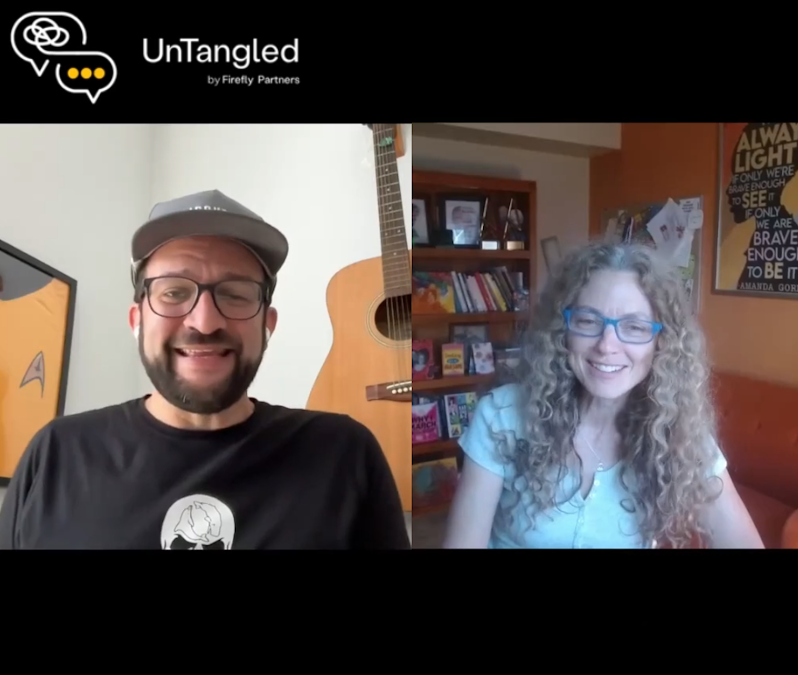
Last week on UnTangled, I sat down with Sal Salpietro, Chief Growth Officer at Dataro, to talk about predictive AI, what it actually is, how it works, and why it deserves a lot more attention from the nonprofit sector than it is currently getting. Because while everyone has been racing to figure out generative AI, the unsexy workhorse of AI has been quietly delivering real results for organizations that are paying attention.
So What Is Predictive AI, Exactly?
Sal has a great way of explaining it. He calls it math AI. Where generative AI creates things, text, images, and code, predictive AI looks at patterns across massive amounts of data and tells you what is likely to happen next. It is not a snapshot. It is constantly running, constantly finding correlations across hundreds of data points, and constantly updating its predictions as new information comes in.
The reason it feels less exciting than generative AI is because it is not visual and it is not interactive. You are not typing a prompt and watching something appear. What you are getting instead is a score. A number, zero to a hundred, sitting on a contact record in your CRM that tells you how likely this particular donor is to upgrade to mid-level, lapse, make their first gift, or become a monthly donor. One number. Enormous implications.
The Use Cases Are More Immediate Than You Think
Churn prediction is the one that stops me every time I talk about it. If you have a monthly giving program, you know the pain of attrition. You acquire donors, you work hard to get them in, and then quietly, one by one, they cancel or their credit cards expire and they never come back. Predictive AI can tell you who is likely to leave before they leave. And Sal shared something that should get every development director’s attention: a simple thank you call to a donor flagged as high-churn-risk can cut that churn by 60 to 80 percent. Not a big ask. Not a campaign. Just a call that says, hey, we see you and we appreciate you.
The flip side is just as powerful. Think about the $50 donor whose company just sold and who is now sitting on an Amex black card in a high income zip code. Under a traditional approach, that person stays in the low dollar segment forever because that is where their giving history puts them. Predictive AI sees the full picture and says, give this person a call. That is a donor who is ready to do something bigger, and you would have missed them entirely.
The same logic applies in reverse. The store manager who gave $500 because it was a once in a lifetime gift should not be getting a major gifts ask. Predictive can flag that too. You stop making donors feel like their gift was inadequate, you stop wasting your team’s time on calls that go nowhere, and you start focusing energy where it is actually going to land.
Why Are We Still Doing This the Old Way?
A lot of organizations are still building their outreach lists using RFM: recency, frequency, and monetary value. It is a foundational framework and it is not without merit, but it has a fundamental limitation that Sal described really clearly: RFM looks backward. It tells you what a donor did. It does not tell you what they are likely to do next or why.
Predictive AI is forward-looking. It is working across hundreds of data points that already live in your CRM, things like email open rates, giving channel preferences, demographic data, and behavioral patterns, and turning all of that into an actionable score. No more building lists over two days before a campaign. Sal shared a real example from BC SPCA: they went from two days of list-building down to about an hour and a half. That is not a small thing when your team is already stretched.
If your org has not gone deep on segmentation yet and is still doing fairly basic list pulls for appeals and campaigns, Sal made a case I found pretty compelling: you might not need to spend a lot of time getting sophisticated with RFM first. You can move straight to predictive and start seeing better results immediately. The process change is smaller than you might expect.
The For-Profit World Is Already Doing This. That Should Bother You.
Sal made a point near the end of our conversation that I keep coming back to. Every for-profit entity that may directly or indirectly cause the problems your organization exists to solve is already using predictive AI. They are using it to optimize, to grow, to stay ahead. Some of them are using it in ways that should make all of us deeply uncomfortable, like predicting when and where to cut trees to avoid oversight. Those are the stakes.
The longer the nonprofit sector waits to adopt the tools that are already standard in the commercial world, the wider that gap gets. And the more ground the organizations working on the other side of these issues are able to gain. That is not abstract. That is the mission.
How Does It Actually Work in Practice?
The good news is that for tools like Dataro, the integration is designed to be as low-friction as possible. It plugs into your CRM, ingests your donor data, including non-donors, because understanding why people are not giving is just as important as understanding why they are, and pushes predictive scores back to a field on each contact record. Your team does not have to learn a new system or change how they work. They just now have a score to query on when they are building their outreach lists.
The best AI, as Sal put it, is the kind that does not disrupt you too much. It fits into the way you already work and just makes it significantly smarter.
If your development team is still pulling lists the same way they were five years ago, this is worth a serious look. The tools are here, they work, and the case for using them is only getting stronger.
Watch the full episode with Sal here:
And if you want to talk through whether predictive AI is a fit for your org, I would love to be a sounding board. Drop me a line at jen@fireflypartners.com or skip to the fun part and book some time with me directly.
Thanks! You’ll hear back within 48 business hours
In the meantime, why not check out our latest case study?

Whether you need help with a project, want to learn more about us, or just want to say hi, you’ve come to the right place.