

UnTangled with Valerie Ehrlich: What Does Responsible AI Use Actually Mean?
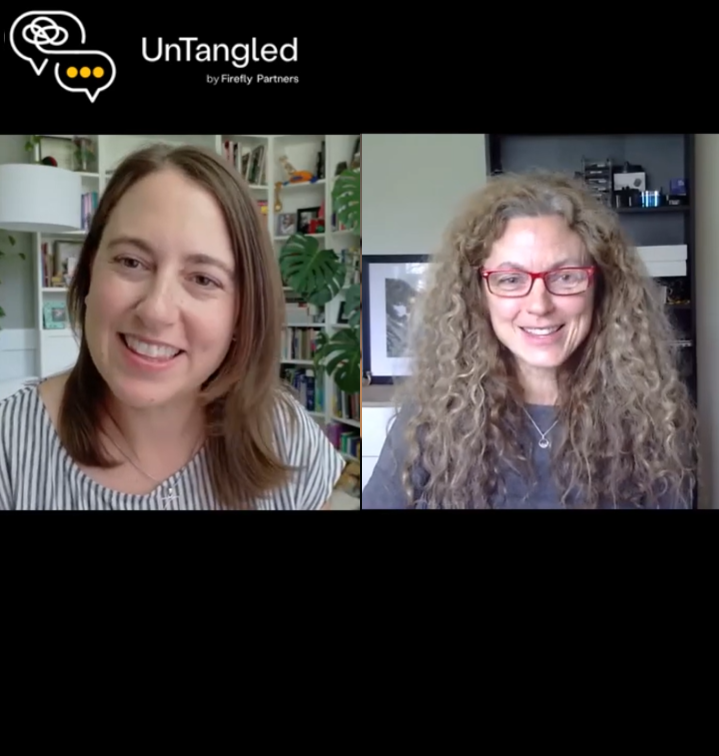
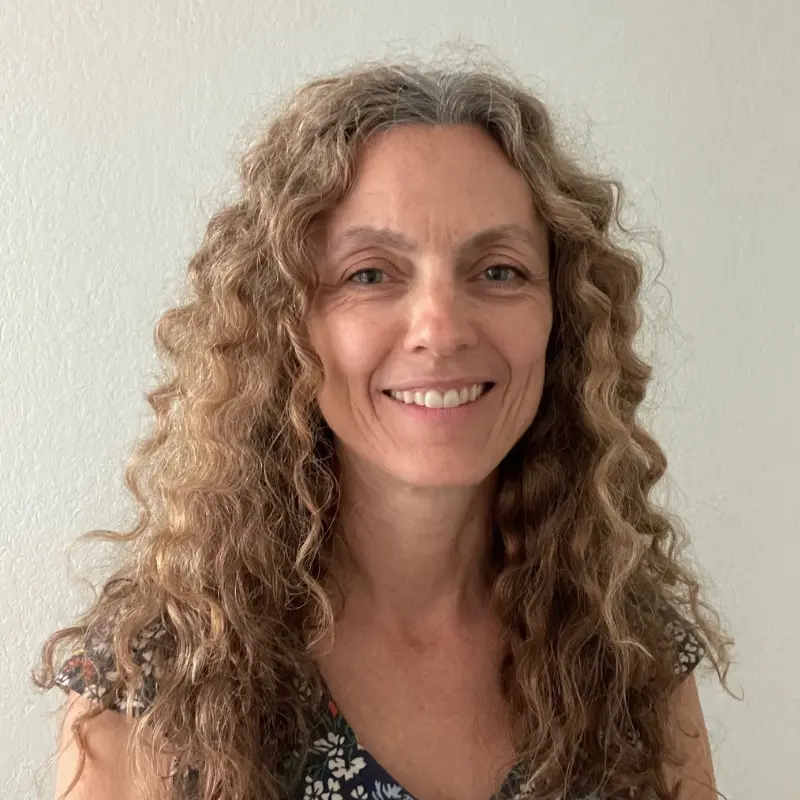
I wrapped up another episode of UnTangled last week with my friend Valerie Ehrlich, founder of Mission Bloom, and we dug into something that has been circling in a lot of conversations I have been having lately. What does it actually mean to use AI responsibly? Not theoretically. In your org, on your team, in your day-to-day work.
And the first thing we had to do was take a hard look at the term “ethical,” and decide when and where that fits.
Ethical AI Is a Rabbit Hole. Responsible AI Is a Practice.
Here is the thing about ethical AI. It is a genuinely important conversation and also one that can swallow you whole if you let it. The ethics behind generative AI are deep, contested, and honestly pretty unresolvable at the moment. If you are waiting until you have fully sorted out the ethical dimensions of AI before your organization takes a step, you are going to be waiting a long time.
Valerie went to the dictionary, because she is a former academic and that is what former academics do, and landed on this: responsible means “answerable or accountable for something within one’s power, control, or management.” That is a very different starting point. Instead of asking whether AI is ethical in some capital E sense, you are asking what you are accountable for, to whom, and within what you actually control. That feels like something you can work with.
Responsible as a Verb
Here is where it gets interesting. Responsible is not a box you check. It is an active, ongoing practice that requires you to stay on top of the decisions the companies behind the tools you use are making. When a platform changes how it handles data centers, or shifts its positions on defense contracts, or makes decisions that conflict with your values, that matters. You get to decide whether that tool still fits inside your definition of responsible use.
That might mean your team lands in a different place than another team on the same question. That is fine. Responsible use is personal and organizational. It is shaped by your mission, your community, and your values. And when a tool no longer fits, you can make a different choice. The good news is that most AI platforms have built-in migration tools that make switching less painful than a traditional tech transition.
Responsible AI is not tidy. It requires you to keep asking the question.
Your Org Is More Ready for This Than You Think
One of the best moments in our conversation was when Valerie connected AI adoption to something nonprofits have already been doing. If your organization built real skills during the DEI era, creating psychological safety, making room for hard conversations, holding space for resistance, those are the exact muscles you need right now for responsible AI adoption.
If those skills are strong, you are probably navigating this better than you realize. If they atrophied or were never really built, AI is likely exposing that gap in ways that feel uncomfortable. This is her point and I think it is a sharp one.
The conditions for responsible AI adoption inside an organization look a lot like the conditions for any meaningful culture work. People need to be able to experiment without shame. Skeptics need a seat at the table, not just tolerance. Leaders need to be honest about what they have decided, what is still open, and what staff can actually influence.
Who Are You Responsible To?
Valerie’s framing for getting organizations unstuck is a simple question: who are you responsible to? When you sit down to decide on adopting a tool, using AI in a certain way, or setting policy for your team, who are the people whose well-being you are accountable for? Start there. Get grounded in that. Then figure out what responsible looks like from that anchor.
It is the same instinct that drives most people into nonprofit work in the first place. The sector already speaks this language. We just have to apply it here.
We are still in the jello on all of this. It is a little more set than it was two years ago, but we have not found our mold yet. And I think that is actually fine. The point is to stay in the conversation, keep evaluating, and resist the pull toward either uncritical adoption or total opt-out.
Watch the full episode with Valerie here, and let me know where you land on the responsible vs ethical framing.
Are you and your team ready to get past theoretical and start using AI responsibly at your org? Firefly can help!
Thanks! You’ll hear back within 48 business hours
In the meantime, why not check out our latest case study?

Whether you need help with a project, want to learn more about us, or just want to say hi, you’ve come to the right place.